
By David Zhang — Tried to time the market. Failed. Tried dollar-cost averaging. Stayed invested. Made money.
Last updated: June 2026
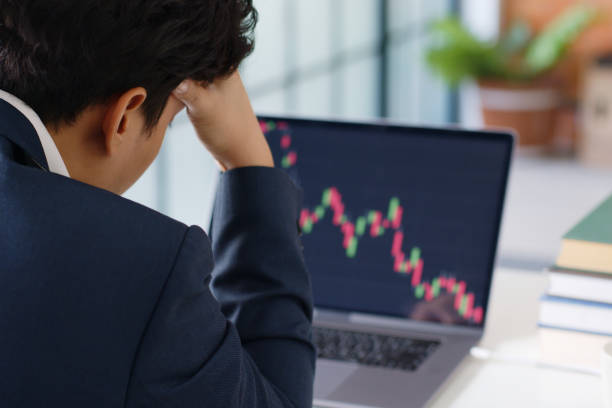
You want to invest. But you are scared. What if you buy and the market drops the next day? What if you should have waited? What if you miss the perfect moment?
This fear keeps many people out of the market entirely. They wait for the “right time.” The right time never comes. Years pass. They have invested nothing.
There is a solution. It is not glamorous. It is not exciting. It works.
It is called dollar-cost averaging.
What Is Dollar-Cost Averaging?
Dollar-cost averaging (DCA) means investing a fixed amount of money at regular intervals, regardless of what the market is doing.
| Month | Amount Invested | Share Price | Shares Bought |
|---|---|---|---|
| January | $100 | $10 | 10 |
| February | $100 | $8 | 12.5 |
| March | $100 | $12 | 8.33 |
| April | $100 | $9 | 11.11 |
| Total | $400 | Average $9.75 | 41.94 shares |
You invested 400. You bought 41.94 shares. Your average cost per share was 9.54. The average price over the four months was $9.75.
You beat the average price by investing consistently.
Why It Works
You stop trying to time the market.
No one can predict the future. Not the experts. Not the TV hosts. Not your cousin who made money on crypto. No one.
DCA accepts this. You invest on schedule. You do not wait for a dip. You do not try to buy at the bottom. You just buy.
You buy more when prices are low.
When the market drops, your fixed amount buys more shares. You are automatically buying at a discount.
You buy less when prices are high.
When the market rises, your fixed amount buys fewer shares. You are not overpaying.
DCA forces you to do the opposite of what your emotions want. Your emotions want to buy when the market is soaring (fear of missing out). Your emotions want to sell when the market is crashing (fear of loss).
DCA ignores emotions. It just buys.
Dollar-Cost Averaging vs. Lump Sum
If you have a large sum of money to invest (inheritance, bonus, savings), you have a choice.
| Strategy | What You Do | Risk |
|---|---|---|
| Lump sum | Invest it all today | Market could drop tomorrow |
| Dollar-cost averaging | Invest fixed amounts over time (6-12 months) | Market could rise while you wait |
Historically, lump sum has outperformed DCA about two-thirds of the time. The market goes up more often than it goes down.
But lump sum is psychologically harder. If you invest $100,000 and the market drops 20% next week, you will feel terrible. You might panic and sell. DCA reduces that risk.
Recommendation: If you are new to investing, use DCA. The psychological benefit is worth the potential lower return. If you are experienced, lump sum is fine.
A Real-World Example
Let us say you start investing $500 per month in the S&P 500 in January 2022. A terrible time to start. The market dropped 20% that year.
| Year | Total Invested | Account Value (End of Year) |
|---|---|---|
| 2022 | $6,000 | $5,200 (down 13%) |
| 2023 | $12,000 | $13,500 (up 12.5%) |
| 2024 | $18,000 | $21,000 (up 16.7%) |
After three years, you have invested 18,000.Youraccountisworth21,000. You made $3,000. You bought through a crash. You kept buying. You came out ahead.
If you had stopped investing in 2022 because “the market is crashing,” you would have nothing.
How to Start Dollar-Cost Averaging
Step 1: Open a brokerage account.
Vanguard, Fidelity, Schwab. Or an app like Betterment, Wealthfront, Robinhood.
Step 2: Choose a low-cost index fund.
S&P 500 (VOO, SPY). Total stock market (VTI). Target date fund.
Step 3: Set up automatic investment.
Every month (or every week). Same amount. Same fund. Automatically.
Step 4: Ignore the noise.
Do not check the market every day. Do not panic when it drops. Do not get cocky when it rises. Stay the course.
Step 5: Increase your contribution over time.
As your income grows, increase your monthly amount. Even $20 more per month adds up over decades.
Common Mistakes
Stopping when the market drops.
This is the worst thing you can do. When the market drops, your money buys more shares. Drops are not a problem. They are an opportunity.
Checking your balance too often.
Daily fluctuations are noise. Look at your balance once a month. Or once a quarter. Do not let daily moves affect your emotions.
Investing money you need soon.
DCA works over long periods (5+ years). Do not invest money you need for next year’s house down payment or next month’s rent.
Not increasing contributions.
As your income rises, increase your investment amount. Even small increases compound over time.
The Math of Consistency
| Monthly Investment | Annual | 10 Years (7% return) | 20 Years (7% return) | 30 Years (7% return) |
|---|---|---|---|---|
| $100 | $1,200 | $17,000 | $52,000 | $122,000 |
| $200 | $2,400 | $34,000 | $104,000 | $244,000 |
| $500 | $6,000 | $86,000 | $260,000 | $610,000 |
| $1,000 | $12,000 | $172,000 | $520,000 | $1,220,000 |
The amounts are not small. But they start small. 100amonthis3.33 a day. You can find $3.33 a day.
Why This Is the “Lazy” Path
You do not need to research stocks. You do not need to watch financial news. You do not need to predict the market.
You need one hour to set up automatic investments. Then you need to do nothing.
That is why DCA is the lazy investor’s path. It requires almost no effort. It works almost all the time.
The Bottom Line
You cannot time the market. No one can. Stop trying.
Set up automatic investments. Same amount. Same time. Every month.
Buy when the market is high. Buy when the market is low. Buy when the market is in between.
Over time, you will buy at an average price. You will not hit the bottom. You will not hit the top. You will do fine.
That is dollar-cost averaging. It is not exciting. It works.
About the author: David Zhang tried to time the market. He bought high. He sold low. He stopped. Now he invests automatically every month. He sleeps better.
This article is for informational purposes. Past performance does not guarantee future returns. Consult a financial advisor for your specific situation.